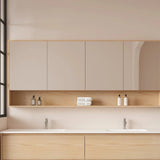
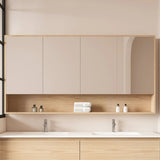
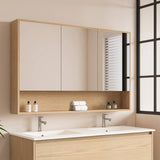
Oak vanities bring warm grain to the bathroom, in tones from light to dark. This range runs from 400mm to 1800mm, wall hung or freestanding, with 360mm-deep slimline units for tight ensuites and 450mm models only 255mm deep. Tones include classic, natural, coastal, prime, Tasmanian, sandy, elegant, red and black oak, in fluted, curved and flat-panel fronts, with ceramic or stone tops depending on the model. To compare oak with walnut and ashwood, browse all timber vanities, or go straight to walnut vanities. Want the ribbed look in other colours? Browse fluted vanities. For a wet ensuite, compare our waterproof vanities.
An oak vanity is easiest to choose in two steps: pick the tone that suits your tiles and light, then check the cabinet material behind it. The same tone name, such as Prime Oak, appears on solid PVC, MDF and plywood cabinets, so the name alone does not tell you how the vanity copes with water.
Oak tone
How it looks (from the listings)
Series to compare
Cabinet core
Melbourne pickup
Coastal Oak
The lightest of the four core oak tones, warm grain
Camden, Bellevue
MDF (Camden: E0 MDF wrapped in oak-grain PVC film)
Poseidon models only
Classic Oak
Light, natural oak grain with a warm cast
Eden, Scandinavia, Artis
Solid PVC
Yes
Natural Oak
Similar depth to Classic Oak with a cooler cast
Rhea
Thermolaminated MDF in the listings we checked
No
Prime Oak
The deepest of the four core oak tones
Eden, Artis, Camden
Solid PVC (Eden, Artis) or E0 MDF with PVC film (Camden)
Poseidon and Koti models only
Elegant Oak
A lighter, finer grain with a calm neutral tone
Hera, Rita
Moisture-resistant MDF
No
Tas Oak
Warm, natural tones
Hera
MDF
No
Sandy Oak
Matt, warm, low-sheen grain
Ravello, Ridgewood
Plywood
No
Red Oak
Warm, reddish-brown grain
Brooklyn
Water-resistant plywood
Yes
Coastal, Classic, Natural and Prime Oak Vanities from Light to Deep
Coastal Oak is the lightest of the four core oak vanity tones, and Prime Oak is the deepest. Classic Oak and Natural Oak sit at a similar depth between them: Classic Oak leans warm, while Natural Oak leans cool. Choose by the colour temperature of your tiles and lighting, not only by how light the vanity is.
Coastal Oak is the palest choice, for a vanity that reads light against white walls.
Classic Oak keeps the light look but adds warmth. The Scandinavia 450mm Classic Oak listing pairs it with white or marble-look tiles.
Natural Oak suits grey or cool white tiles, where a warm oak can look slightly orange.
Prime Oak gives the most contrast against a white stone top or pale floor.
An oak vanity finish also shifts with lighting. Our listings note that the same oak finish looks warmer under yellow downlights and cooler and greyer under daylight or LED. Treat any photo as a guide to the overall tone, and email info@rjbathroom.com.au for extra real photos of a finish before you order.
Tas Oak Vanities and Real Tasmanian Oak
A Tas Oak vanity in this collection is an oak-look finish on an MDF cabinet, not a solid Tasmanian oak cabinet. Tasmanian oak is the trade name for Australian eucalyptus species rather than a true oak, and the Hera Tas Oak range copies its warm, natural tone. Choose it if you want that local look on a ready-made vanity.
The Hera Tas Oak 900mm wall hung vanity is a good size to start from. If Tas Oak feels too warm for your tiles, Elegant Oak in the same Hera range is described as a lighter, finer grain. Every oak finish here sits on a PVC, MDF or plywood cabinet, so check the material line in each listing. For walnut and other tones, browse our timber vanities.
Oak Vanity Tone Names vs Cabinet Material
An oak vanity's cabinet material decides how it handles a wet bathroom, and it changes by series, not by tone. Two Prime Oak vanities can have different cores, so read the material line in each listing before you settle on a colour.
Solid PVC (Eden, Scandinavia, Artis): the board itself does not absorb water. This is the most forgiving core for a busy or steamy bathroom. Compare more in our waterproof vanities.
E0 MDF with oak-grain PVC film (Camden): the film wraps the cabinet edges to seal the board.
Moisture-resistant or thermolaminated MDF (Hera, Rita, Rhea): MDF resists splashes and only swells if water is left sitting on it.
Plywood (Ravello, Ridgewood, Brooklyn): cross-laminated layers, which the listings describe as more moisture-tolerant than particleboard.
Whatever the core, the listings we checked do not cover water damage under warranty, so wipe up standing water around the basin and keep the room ventilated.
Matching an Oak Vanity with Tops, Tapware and Handles
An oak vanity pairs most easily with a white or marble-look stone top, which lifts the grain without competing with it. For tapware, the listings name specific pairings for each tone, so start there and match the handle to the tap.
Eden and Scandinavia handles: five finishes (Brushed Gold, Brushed Nickel, Gun Metal, Matte Black and Matte White), so the handle can match your tapware.
Stone tops on the oak vanities we checked include Carrara, Calacatta White, Calacatta Night and matte white solid surface. Tops are drilled to the tap hole position you choose, and that cannot change once the order is placed. To finish the wall above, browse our shaving cabinets in the same width as your vanity.
Wall Hung or Freestanding Oak Vanities
About two thirds of the oak vanities here are wall hung. Choose a wall hung oak vanity for an open floor that is quick to mop, and a freestanding oak vanity for storage that runs down to the floor and hides floor plumbing.
Wall hung oak ranges include Eden, Artis, Brooklyn, Ravello and most Hera sizes. See all wall hung vanities.
Freestanding oak ranges include Camden (on legs or with an optional kickboard), Rhea, Scandinavia and Rita. See all freestanding vanities.
A wall hung vanity needs solid fixing: noggins or a masonry wall behind the lining.
The right oak vanity depends on three things: how light you want the room to feel, whether your tiles lean warm or cool, and how wet the bathroom gets.
If you want the palest oak, choose Coastal Oak in the Camden range.
If you want a light, warm oak in a steamy bathroom, choose Classic Oak in Eden or Scandinavia for a solid PVC cabinet.
If your tiles are grey or cool white, choose Natural Oak in the Rhea range.
If you want contrast with a white stone top, choose Prime Oak, such as the Eden 600mm Prime Oak.
If you want the Tasmanian oak look, choose Hera Tas Oak.
If you want something darker than oak, choose from our walnut vanities.
Oak Vanity Pickup and Viewing
About a third of the oak vanities here are Poseidon or Koti models, and you can pick those up free from Dandenong South (VIC) as well as from our Sydney warehouses. Pickup is free and needs no booking. To see an oak finish in person in Sydney, call 0480 746 325 to view by appointment.
The RJ Bathroom team in Sydney wrote this guide from the product listings in this collection. If a listing and this guide ever differ, the listing is correct, and you can call us to check before you order.
Oak Vanities FAQs
Is an oak vanity good for a bathroom?
Yes, an oak vanity works well in a bathroom when the cabinet behind the oak finish suits the room. The oak vanities in this collection use oak-look finishes on solid PVC, MDF or plywood cabinets rather than raw oak. Solid PVC models such as Eden, Scandinavia and Artis do not absorb water, so they suit steamy or busy bathrooms. MDF models resist splashes but can swell if water is left sitting on them. For the most water-tolerant options, compare our waterproof vanities.
What is the difference between coastal, classic, natural and prime oak?
Coastal, classic, natural and prime are oak vanity tone names, and they differ in depth and warmth. Coastal Oak is the lightest. Classic Oak and Natural Oak sit at a similar depth just above it: Classic Oak leans warm, and Natural Oak leans cool. Prime Oak is the deepest of the four. The tone name does not tell you the cabinet material, so a Prime Oak Eden is solid PVC while a Prime Oak Camden is MDF wrapped in PVC film. Check the material line in each listing, such as the Eden 600mm Prime Oak.
Is a Tas oak vanity made from real Tasmanian oak?
No. A Tas Oak vanity in this collection is an oak-look finish on an MDF cabinet, not solid Tasmanian oak. Tasmanian oak is the trade name for Australian eucalyptus species rather than a true oak, and the Hera Tas Oak range copies its warm, natural tone. That gives you the look in a ready-made vanity with stone or ceramic top options. If Tas Oak feels too warm for your tiles, the Hera Elegant Oak finish is described as a lighter, finer grain. Start with the Hera Tas Oak 900mm.
What benchtop and tapware colours suit an oak vanity?
A white or marble-look stone top is the easiest match for an oak vanity, because it lifts the grain without competing with it. Our listings pair Classic Oak with brushed gold or brushed nickel tapware, Elegant Oak with matte black, brushed nickel, brushed gold or gun metal, and Sandy Oak with brushed brass, matte black or gunmetal. Eden and Scandinavia models also offer the handle in five finishes, so it can match your tapware. Browse brushed gold tapware or black tapware to finish the look.
How much does an oak vanity cost?
Oak vanities in this collection are currently listed from $279 to $3,419.10, based on the lowest listed price for each model. Price depends mostly on width, the number of bowls, the cabinet material and the top you choose. The lowest prices sit with compact Scandinavia Classic Oak models, and the top of the range is the Aulic Varcelli Harvest Oak 1200mm freestanding vanity with a stone top. All products are sold at trade prices. For a popular middle size, compare our 1200mm vanities.
Fast Shipping
Australia wide delivery with flexible date scheduling
Trade-Trusted suppliers
The Tradie’s Choice - Reliable Stock & Trade Prices
14-Day Easy Returns
Make returns simple and straightforward for any order
National Warehouses
Viewing by appointment & Free national warehouse pickup


 Free Metro Shipping


 All Tapeware Free Shipping